The Emotional Dimension of Wellness: Learning to Honor What We Feel
Our emotions are powerful messengers. When we learn to understand and care for our emotional world, we strengthen our resilience, deepen our relationships, and create space for authentic healing.
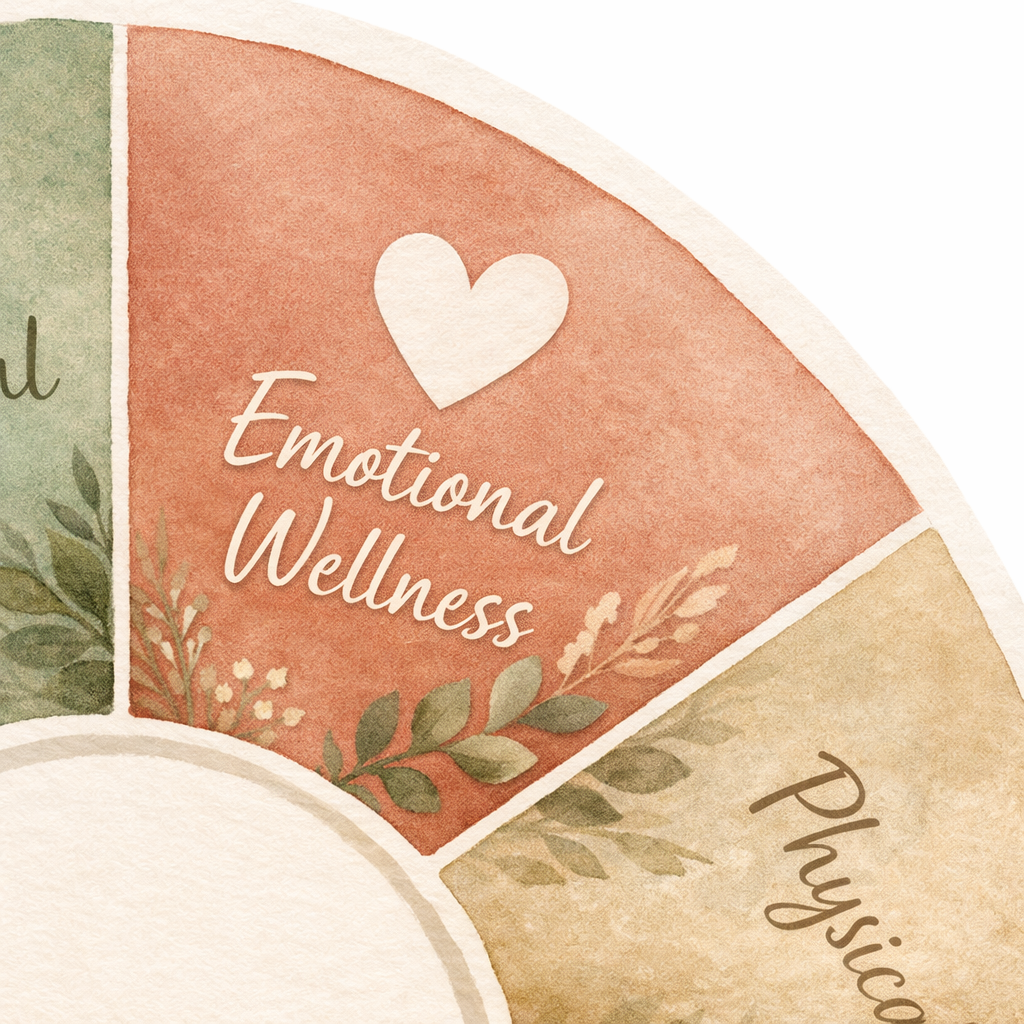
Emotional Wellness: What It Means
Emotional wellness involves the ability to understand, express, and manage our emotions in healthy ways. It does not mean feeling happy all the time or avoiding difficult feelings. Instead, emotional wellness invites us to become more aware of what we feel and why we feel it.
Every emotion carries information. Joy may signal connection and fulfillment, while sadness may point toward loss or unmet needs. Even emotions like anger and fear can serve important protective purposes.
When we allow ourselves to acknowledge our emotional experiences with curiosity rather than judgment, we create opportunities for growth and self-compassion.
Emotional wellness also helps us build stronger relationships. When we understand our own emotions, we become better able to communicate our needs, set boundaries, and respond thoughtfully to others.
In many ways, emotional wellness forms the foundation for the other dimensions of wellness. When we care for our emotional world, we create the internal stability needed to grow in other areas of life.
Signs of Strong Emotional Wellness
People who nurture their emotional wellness often demonstrate several important skills:
Recognizing and naming their emotions
Expressing feelings in healthy ways
Managing stress effectively
Practicing self-compassion
Asking for support when needed
These skills develop over time. Emotional wellness is not about perfection—it is about learning and practicing new ways of relating to ourselves.
Focus Areas of Emotional Wellness
Emotional wellness often centers on three key themes:
Awareness
Learning to notice and name our emotional experiences.
Expression
Finding healthy ways to communicate feelings and needs.
Regulation
Developing skills that help us navigate intense emotions with care.
Ways to Strengthen Emotional Wellness
Building emotional wellness is a lifelong practice. Small steps taken consistently can make a meaningful difference.
You might consider:
Journaling or reflecting on emotional experiences
Practicing mindfulness or grounding exercises
Talking with trusted friends, family members, or a therapist
Learning emotional vocabulary to better describe what you feel
Setting healthy boundaries that protect your well-being
Over time, these practices can increase emotional resilience and deepen our sense of self-understanding.

Make it stand out
Emotional Wellness and Healing
For many people, emotional wellness also involves healing from past experiences. Trauma, chronic stress, and difficult life events can shape how we experience and respond to emotions.
Therapeutic approaches such as trauma-informed therapy and EMDR can help individuals process these experiences and develop healthier emotional patterns.
Healing is rarely linear, but with support and compassion, it is possible to create a more balanced emotional life.
A Gentle Reflection
Consider taking a moment to reflect on your own emotional well-being:
What emotions have been present for you recently?
How comfortable do you feel expressing your emotions?
What practices help you care for your emotional world?
Even small moments of awareness can become powerful steps toward emotional wellness.
Closing Thoughts
Emotional wellness invites us to build a compassionate relationship with ourselves. When we allow space for our full range of emotions—without judgment—we open the door to deeper self-understanding and authentic healing.
At Sacred Roots Wellness, emotional well-being is honored as an essential part of the healing journey.