Understanding the Wellness Wheel
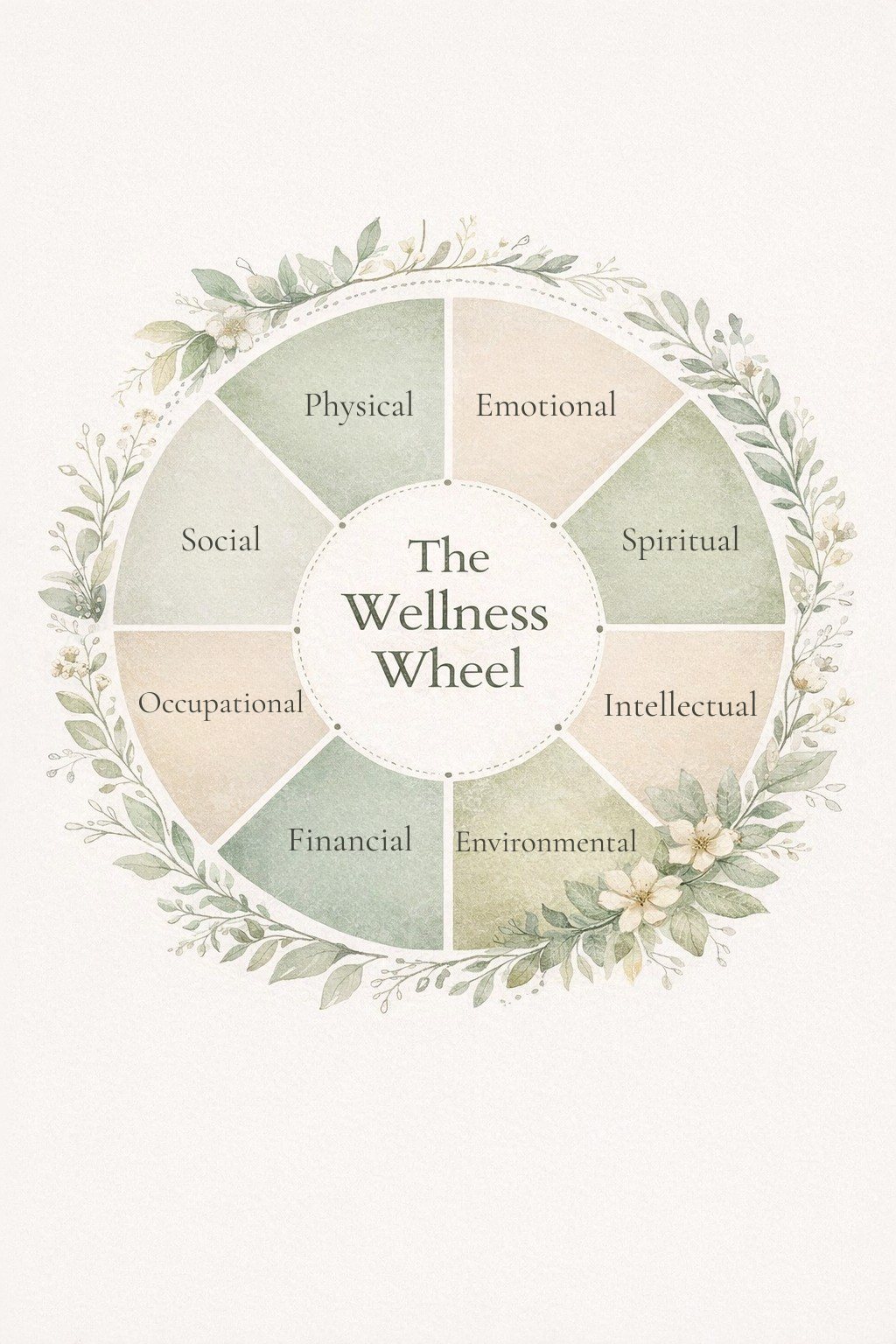
The Wellness Wheel: A Holistic Approach to Well-Being
Wellness is more than the absence of distress—it’s the presence of balance, connection, and meaning across all areas of life. At Sacred Roots Wellness, we view healing as a whole-person journey, one that honors the mind, body, emotions, and relationships that shape our daily experience.
The Wellness Wheel is a visual and conceptual tool that helps us understand well-being as multidimensional. Rather than focusing on one area alone, the wheel reminds us that true wellness comes from nurturing all parts of ourselves.
What Is the Wellness Wheel?
The Wellness Wheel is made up of interconnected dimensions that represent different aspects of our lives. Each section of the wheel contributes to our overall sense of balance and stability. When one area feels depleted or neglected, it can affect how we feel emotionally, mentally, and relationally.
Wellness isn’t about perfection or having every area “fully optimized.” Instead, it’s about awareness, intention, and compassion—learning where support is needed and responding gently.

Emotional Wellness
Focus:
Emotional awareness
Regulation vs suppression
Self-compassion
Improvement themes:
Naming emotions
Nervous system regulation
Therapy as emotional support

Physical Wellness
Focus:
Body awareness
Sleep, movement, nourishment
Trauma stored in the body
Improvement themes:
Gentle movement
Rest as healing
Listening to the body
Social Wellness
Focus:
Attachment
Communication
Belonging
Improvement themes:
Boundaries
Safe connection
Healing relational patterns

Occupational Wellness
Focus:
Meaningful work
Burnout
Identity
Improvement themes:
Alignment with values
Redefining success
Sustainable pacing

Financial Wellness
Focus:
Money stress
Safety and stability
Shame reduction
Improvement themes:
Mindful budgeting
Financial boundaries
Reducing anxiety around money

Environment Wellness
Focus:
Physical space
Sensory safety
Nature
Improvement themes:
Decluttering
Creating calm spaces
Nature as regulation

Intellectual Wellness
Focus:
Curiosity and learning
Open-minded thinking
Engaging the mind in meaningful, creative ways
Improvement themes:
Read, listen, or learn something new each week
Limit passive media consumption and practice intentional input
Explore a creative or skill-building activity
Spiritual Wellness
Focus:
Meaning, values, connection
Inner wisdom (non-religious framing)
Improvement themes:
Rituals
Mindfulness
Purpose and alignment
Why Balance Matters
Imagine a wheel with uneven spokes. No matter how strong some areas are, the wheel won’t roll smoothly. The same is true for our well-being. For example:
Emotional overwhelm can impact physical health
Relationship stress can affect mental clarity
Lack of purpose can lead to fatigue or disconnection
Healing often begins by noticing these patterns and understanding that struggle in one area doesn’t mean failure—it means something is asking for care.
Wellness Is Personal and Ever-Changing
Your Wellness Wheel will look different at various stages of life. What feels balanced today may shift tomorrow—and that’s okay. Wellness is dynamic, not fixed. This perspective invites flexibility, self-compassion, and curiosity instead of pressure.
Therapy and holistic support can help you explore each dimension, strengthen areas of imbalance, and reconnect with your inner resilience.

A Closing Reflection
The Wellness Wheel reminds us that healing isn’t about fixing what’s broken—it’s about tending to what’s been neglected. By nurturing each dimension of ourselves, we create a life rooted in balance, authenticity, and growth.
In the coming weeks, we’ll explore each dimension of the Wellness Wheel and offer gentle ways to support your well-being in every area.